31 Films of Halloween – 10/1/15: Re-Animator

Each day during October, Madison Film Guy will post a new mini-review/recommendation/musing on a contemporary or classic horror film to help celebrate my 31 favorite days of the year: the countdown to Halloween! Today’s film: 1985’s Re-Animator.

reanimator-poster

Re-Animator, 1985

In 1999, I met Stuart Gordon at a screening of one of his films on campus at the University of Wisconsin – Madison. After the movie, I waited around to introduce myself, asked if I could interview him sometime, and Gordon graciously gave me his card and told me to call him. I should note at this point that I was not working as a journalist and had nowhere to publish the interview, but that’s beside the point. When I called his production office a couple of days later, I got his answering machine, left a message, and assumed I’d never hear back from him.

To my surprise, Gordon did call me back, and we scheduled an interview a week later.

That week, I plowed through all ten of his movies as research for the interview. One evening, as I was re-watching his first film, Re-Animator, my phone rang, and it was Gordon. He was personally calling to reschedule the interview, which we did. After we hung up, though, I marveled at the fact that I had just received a call from minor legend in the horror field WHILE I was watching his iconic, ground-breaking film. I assumed—correctly—that that would never happen again. But it remains one of my favorite stories to this day.

The film itself, Re-Animator, also remains one of my favorites, not just in the horror genre but on my all-time list.

Re-Animator, a loose adaptation of an H.P. Lovecraft short story, is the tale of Herbert West, an arrogant young medical student who develops a reagent that can re-animate dead tissue. However, when West decides to experiment on human corpses and injects his reagent into various medical school cadavers, he discovers that they are far less enthusiastic about his experiment than he is.

A campy blend of classical horror archetypes mixed liberally with heavy doses of ‘80’s sex, gore, and violence—not to mention dark, black comedy—Gordon’s first film is wildly entertaining and genuinely frightening at times.

When Re-Animator opened in 1985, critics did not seem to know how to react. The venerable Janet Maslin warned that the film should “be avoided by anyone not in the mood for a major blood bath.” A more generous Roger Ebert wrote of his fellow Chicagoan’s film that Re-Animator is “a frankly gory horror movie that finds a rhythm and a style that make it work in a cockeyed, offbeat sort of way.” And Pauline Kael effused that it was a “horror-genre parody [at] the top of its class.”

Today, the film endures as a true horror classic. Suspense. Scares. Sex and gore. The film opens with a gothic nod to traditional horror and then immediately flashes its Grand Guignol street cred and wicked sense of humor. It takes hold of you and never lets go.

So, thanks, Stuart Gordon, for all the memories.

October 2015 marks the 30th anniversary of the release of Re-Animator. To mark the anniversary, Madison Film Guy has published—for the first time—that 1999 conversation with Stuart Gordon. Read “Death is the Monster: A Conversation with Stuart Gordon” now at Madison Film Guy.


Death is the Monster: A Conversation with Stuart Gordon

This interview with director Stuart Gordon was conducted in the summer of 1999. The article, originally written for a popular film magazine, ultimately went unpublished and is being circulated now, here, for the first time. At the time of the interview, Gordon had directed a total of ten films in fourteen years—all in the horror, science fiction, and fantasy genres—including his first and most iconic work, the cult horror classic Re-Animator. Since then, he has directed only four more feature films. In the mid-2000’s, though, Gordon enjoyed a bit of a career renaissance as one of Showtime’s Masters of Horror, directing two mini-film episodes of that critically-acclaimed series: Dreams in the Witch-House and The Black Cat. This month, October 2015, Gordon’s Re-Animator celebrates the 30th anniversary of its release.

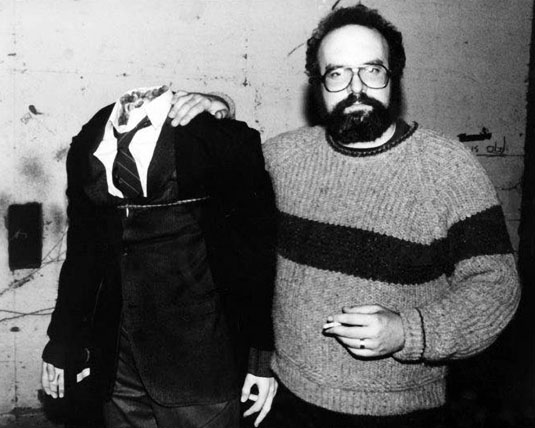
headlessGordon

When Stuart Gordon finally decided to direct a movie, he wanted to make a quick impression. In fact, his approach to his first film might best be summed up by its title character, who—in one pivotal scene—confidently hisses at his rival, “I’ll show you!”

Gordon showed us, alright. His inaugural film, Re-Animator—his confident hiss at the horror genre—is a groundbreaking exercise in over-the-top violence and gore, effective low-budget special effects, and plain old wicked fun.

“One of the things that [producer Brian Yuzna] did was sat me down,” Gordon recalls, “and we screened together just about every horror movie that had been made in the [previous] ten years.”

“The task that he set before us was that we had to somehow out-do these films. We had to come up with a way to go beyond what they had done…be more outrageous or more tasteless or whatever. That was how you made your mark in horror movies, and I think that was good advice.”

It was good advice, indeed. Released in 1985, Re-Animator thrust the first-time director into the cult-film spotlight and helped Stuart Gordon become a minor deity in the world of midnight horror movies.
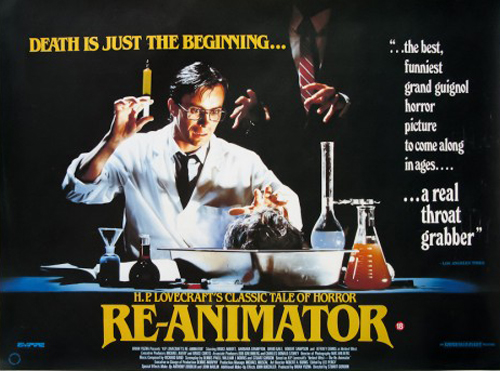
reanimator-poster

Re-Animator, a loose adaptation of an H.P. Lovecraft short story, is the tale of Herbert West, an arrogant young medical student who develops a reagent that can re-animate dead tissue. However, when West decides to experiment on human corpses and injects his reagent into various medical school cadavers, he discovers that they are far less enthusiastic about his experiment than he is.

A campy blend of classical horror archetypes mixed liberally with heavy doses of ‘80’s sex, gore, and violence, Gordon’s first film is wildly entertaining and genuinely frightening at times, and it set in motion a film career baptized in crimson red.

Stuart Gordon first developed his love for horror as a child, sneaking out against his parents’ wishes to watch the latest releases at the local theater.

“I’ve always been a fan, ever since my parents forbade me from seeing horror films. So, of course, I had to go see as many as I possibly could,” he laughs.

Gordon speaks reverently of the groundbreaking horror classics of the 1930’s, ‘40’s, and ‘50’s. However, he recalls most fondly the work of horror innovator William Castle, whose sense of showmanship and mastery of the outrageous shaped Gordon’s career both in theater and in film. “There was one [movie] called Macabre,” Gordon remembers, “where you had to sign a life insurance policy before you could get into the theater. And while you were waiting in line to get in, you’d see people being wheeled out on stretchers. It was great theatrics.”

It was those early films, as well as “circuses and other kinds of things that kids get to see when they’re growing up,” that fascinated Gordon and eventually drew him into show business.

“I remember going to see puppet theater and plays,” Gordon recalls. “I found that these things played on in my imagination, and that’s what I like to try to do with my films: get the audience’s imagination working.”

Born in Chicago in 1946, Gordon developed an interest in theater as a student at the University of Wisconsin at Madison. There he wrote and produced a play called The Gameshow, which drew upon the gimmickry and audience interaction that he had admired in William Castle. Gordon and his new-found theater friends went on to produce creative adaptations of Titus Andronicus, Who’s Afraid of Virginia Wolf?, and Hamlet, at one point producing four plays in two months. However, when they produced an adaptation of Peter Pan that included hippies, metaphorical drug trips, and nude dancers, Gordon was arrested for public obscenity and ended up leaving the UW six credits shy of graduation.

Gordon and a number of other members of his student theater company left campus and founded the Organic Theater in Madison. Before long, though, the emerging Chicago theater scene beckoned, the Organic relocated, and Gordon never looked back.

In Chicago, Gordon adapted Animal Farm, which was the first of 40 plays that he would direct during the next 16 years. His initial attempted at horror came when he produced Poe, which Gordon has called “a nightmare version” of Edgar Allan Poe’s life and writings.

Even as he continued to work in theater, though, Hollywood began to take notice of Stuart Gordon.

His play E/R ran for 3 years and was transformed into a successful TV sitcom by Norman Lear. The Organic’s production of David Mamet’s Sexual Perversity in Chicago eventually became the hit film About Last Night. And Chicago’s Public TV station, WTTW, invited Gordon to direct a three-camera production of the Organic’s Bleacher Bums, for which Gordon won an Emmy.

Finally, Gordon decided that it was time to make a movie, but rather than dip his toe carefully into the cinematic waters, he dove into the creative deep-end and generated more than his share of waves.

When Re-Animator opened in 1985, critics did not seem to know how to react. The venerable Janet Maslin warned that the film should “be avoided by anyone not in the mood for a major blood bath.” A more generous Roger Ebert wrote of his fellow Chicagoan’s film that Re-Animator is “a frankly gory horror movie that finds a rhythm and a style that make it work in a cockeyed, offbeat sort of way.” And Pauline Kael effused that it was a “horror-genre parody [at] the top of its class.”

In his own good-natured way, Gordon bristles at the suggestion that Re-Animator is a parody.

“My feeling is that we never intended it to be a parody,” Gordon says in response to Kael’s characterization. “It’s a horror film!”

Not only is Re-Animator a horror film, it may be the most original, definitive horror film of its generation.

The 1980’s was the decade of the stalker and splatter sub-genres, which were born in 1978 with John Carpenter’s Halloween. Through the ‘80’s—and into the ‘90’s—the Halloween sequels, the Friday the 13th films, and the A Nightmare on Elm Street series were the dominant films of the horror genre. Their popularity and box office success set a standard and dictated a formula that hundreds of imitators would follow for decades to come. Even today—in films like Scream, I Know What You Did Last Summer, and their sequels—the formula is not only intact, but celebrated.

“You know, everyone always talks about Scream as being the rebirth of horror,” Gordon says, “but to me Scream is basically just a retread of the old splatter films of the ‘70’s and ‘80’s, just with a hipper sensibility…a sort of self-knowing.”

With Re-Animator, though, Gordon worked outside the new rules and developed his own formula for success. He did, however, recognize the classic conventions common to the best horror films throughout history.

“Well, I’m a huge fan of the old…Universal horror films,” Gordon says, “and then the Hammer films. So those movies were in the back of my mind. I felt like Hammer had gone further than Universal had with the sex and gore. You know, there is always this sort of mix of sex and gore in horror.”

“From the very earliest days of horror, there’s always a connection between sex and death,” Gordon explains. “I think what it is is that sex and death are really two sides of the coin. And I guess what you’d actually say is life and death, really, with sex implying the creation and rebirth and life. And death is the monster.”

“A lot of the old movies,” he continues, “there’s a really strong sexuality that runs through them. One of my favorite scenes is in The Creature from the Black Lagoon, where you see the girl swimming on the surface of the water, and the creature is swimming right below her. And it’s really sexy.”

“In the ‘80’s, with the splatter films, things were getting much more explicit. Things that could only before happen off screen were suddenly happening right in your face. Although, it was mainly in terms of the violence and the gore, and my feeling was let’s go further with the sex, as well.”

Once again, as promised, Gordon went further.

Re-Animator is a monument to Gordon’s ability to mix together a stew of sex, violence, and a third element—humor—to create striking, effective, memorable moments of horror.

In fact, Gordon’s ability to strike that balance was evident right from the start. The very first sequence of Re-Animator demonstrates the dry comic sensibility that would set the tone for the rest of Gordon’s horror career. Then, later in the film, his sense of humor, along with what would become his trademark mix of perverse sex and violence, finds full bloom in what remains one of Gordon’s most memorable film moments.

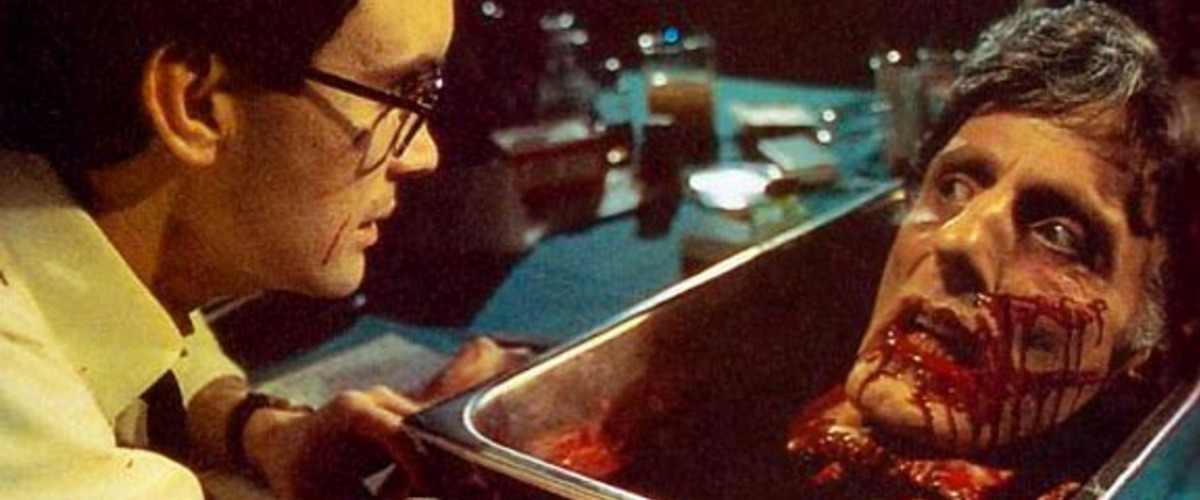
West’s rival mad scientist, Dr. Hill, has had his head unceremoniously lopped off, only to be re-animated moments later in two separate pieces. While West busies himself with the head, Hill’s headless corpse sneaks up behind him and knocks West unconscious. Despite his designs on word conquest, though, the re-animated Dr. Hill begins his reign of terror with baby steps: by kidnapping a sexy student over whom he has been obsessing. Hill drags her back to the medical school morgue, straps her to an operating table, and—with the decapitated body dutifully holding the severed head in its hands—begins to orally violate her while the girl screams in horror.

In the midst of this disturbing assault, West appears out of nowhere and dead-pans: “I must say, Dr. Hill, I’m very disappointed in you. You steal the secret of life and death, and here you are trysting with a bubble-headed coed. You’re not even a second rate scientist.”

head

Like his manipulation of sex and violence, Gordon—who also co-wrote Re-Animator—uses humor intentionally in his horror films, calling those moments “safety valves” that allow his audience to blow off tension before he plunges them back into the horror.

“When you have a horror movie audience,” Gordon explains, “you have an audience that really wants to laugh. I think that the reason is that laughter is an antidote for fear.”

He also recognizes that, to an extent, horror and humor go hand-in-hand.

“Hitchcock used to say that comedy and horror were basically the same emotion,” he says, “which I couldn’t quite understand, but I can sort of get a sense of it. Telling a joke is kind of like scaring somebody, in a way: there’s a set-up—a build-up to something—and then a surprise.”

Horror, he says, follows the same basic formula.

However, Gordon also recognizes that too much humor—or the wrong kind—can dilute the horror and alienate his audience.

“The fans take this stuff very seriously, and so does anyone who really loves [horror], and they don’t want someone mocking it,” he says. “But I think that the fans do like it when there’s a sense of humor that’s part of the process…but that’s not at the expense of the situations or the characters.”

“I think that there has to be a respect for the genre there,” Gordon concludes.

Not only has Gordon demonstrated a respect for the genre over the course of his film career, he has demonstrated a mastery of it, as well. That success comes in part from an evolving understanding of what makes horror work.

“I think that one of the things I’ve been learning,” Gordon explains, “is that horror is slow. In a sense, the slower it is, the better it is. It’s sort of the opposite of action, where you have a lot of quick cutting. But in horror, what really kind of freaks out an audience is the expectation of what they’re about to see.”

“It’s sort of like the unmasking of the monster in Phantom. No matter how great your makeup is, as soon as you see that whatever it is, it’s sort of like, OK, I can deal with this. But it’s not knowing what it is that is really what gets to you. And, again, it’s that you put the audience’s imagination to work…and they imagine things that are much more upsetting than anything that you can create.”

“The unknown is always more scary than the tangible or the known.”

Gordon continued to explore the unknown in his next film, From Beyond, in 1986. Again, based on H.P. Lovecraft’s work, Gordon’s second film strove for the same blend of sex, violence, and humor that made Re-Animator such an instant and enduring horror classic. His success the second time around was more moderate, but he maintained his reputation as a director who would push the edge of the envelope, and From Beyond produced a number of very effective horror moments.

“What we tried to do with From Beyond,” Gordon says, “was to have [the monster] constantly metamorphosing, so that you never were going to get the ultimate horror. You knew it was going to be something different each time.”

From there, Gordon went on to produce seven more films in the horror and science fiction genres, with varying degrees of success: Dolls (1986), The Pit and the Pendulum (1990), Daughter of Darkness (1990), Robot Jox (1991), The Fortress (1993), Castle Freak (1995), and Star Truckers (1997). At the same time, he wrote the screenplays for the films Body Snatchers (1993) and The Dentist (1996), and he received story credits for The Progeny (1997) and the box office hit Honey, I Shrunk the Kids (1989).

Like Re-Animator, which revived a nearly defunct horror archetype—the mad scientist—Gordon’s most recent horror film, Castle Freak, reaches back into the genre’s classic past to explore another nearly-forgotten horror subgenre: terror in a Gothic castle.

However, Gordon’s latest film, The Wonderful Ice Cream Suit, takes the director in an entirely new direction. A direct-to-video release, The Wonderful Ice Cream Suit is a family-friendly comedy about the hopes and ambitions of five friends from the barrios of South Central L.A. Gordon had produced the Ray Bradbury play twenty years before on the stage, and when he decided to take a break from horror, The Wonderful Ice Cream Suit seemed to be the perfect vehicle for him. It gave him and the other people involved in the film—like veteran actor Edward James Olmos—a chance to spread their wings and try something new.

“Originally, I was going to cast [Olmos] in a different part,” Gordon confesses, “and he said, ‘I’d be happy to play it. I like this movie. I want to be in it. But I’d much rather play Vamenos,’” the broad comic role. “And I was trying to think of a tactful way of saying this to him, but finally just came out and said, ‘Well, Eddie, can you be funny?’ And he then proceeded to show me. He went through the whole script with me, and I was on the floor. He was so funny!”

“You know, Hollywood has a tendency to want to typecast you,” Gordon continues. “Because I did Re-Animator as my first film, that’s sort of all they want me to do: horror films. Eddie Olmos’ first movie, I think was Zoot Suit, and he was so stiff in that, everyone just sort of saw him as a serious actor. But he’s incredibly versatile. This movie was a chance for all of us to sort of do something different.”

In addition to Gordon and Olmos, the “all” that the director refers to is a terrific ensemble cast, including Joe Mantegna, Esai Morales, Pedro Gonzalez Gonzalez, and Gregory Sierra, as well as comedy veterans Sid Caeser and Howard Morris.

Gordon credits his theater background with teaching him how to get the most out of actors.

“You know, I spent 15 years directing theater,” Gordon notes, “and it made me really love being in the company of actors. It’s great fun, and I think it’s one of the things that unfortunately is not taught in film schools. Film students learn all sort of technical know-how, but the actual working with the actors is something they have to pick up on their own. It’s too bad, because I think that’s where the heart of it all is.”

That love of actors has compelled Gordon to work with many of the same actors from film to film.

“When I did theater,” Gordon recalls, “you spend the whole time you’re working with somebody just getting to know them, and you really don’t start doing your best work until you’re working on your second or third piece with the same person. And I think movies even more so. Everyone just sort of shows up on the first day of shooting, and you kind of hope it’s going to work out. Everyone has a different way of working, a different method, different things that they like to do and that they don’t like to do…and it takes a long time to sort of get on the same wavelength. I think that that’s where the key is. When you find people who you can communicate with and whose work you like and they like yours…you should hang onto those people.”

Gordon also plans to hang onto the genre that established him as a film director. Although The Wonderful Ice Cream Suit provided a nice change of pace for him, Gordon plans to jump back into the horror genre with his next film.

“I think that the next piece that I’m going to do is going to be a horror film,” Gordon predicts. “I’m working on a couple of things, and both of them are very intense horror films.”

However, even as he prepares to return to his roots, Gordon senses a change on the horizon for the horror genre, which he sees as the natural order of things.

“I always think about the TV series The Munsters,” Gordon says. “You’ve got the Frankenstein makeup, and it’s funny. Well, when that makeup originally premiered, supposedly women were having miscarriages and stuff because it was so horrifying.”

“I think it’s part of what happens with horror,” Gordon explains. “Each generation has to reinvent it for itself. You know, the things that scared our parents we think of as sort of corny and quaint, and our kids will think that the stuff that scared us is equally ridiculous.”

The director sees that transition happening already, with the stalker/splatter films beginning to parody themselves.

Scream in a sense does and doesn’t,” Gordon says. “It still is going for genuine scares. Wes Craven, I think, is a great filmmaker. So it’s not parodying it, exactly. But I do think that some of the more recent [series], like A Nightmare on Elm Street, for example [are]. Freddy Krueger is no longer scary. He’s become a comedian.”

“I think it is definitely the end of the splatter film,” he continues. “That’s pretty much over. Peter Jackson’s movie—here it was called Dead Alive, in Europe it’s called Braindead—just went so overboard with the splatter that it really became just like a Roadrunner cartoon. It wasn’t scary. It was funny.”

“So, I think audiences get used to anything after a while, so you just have to keep coming up with new ways to scare people.”

Those new ways, Gordon thinks, are coming from outside the Hollywood mainstream. While Hollywood continues to squeeze whatever life is left out of the stalker/splatter subgenres, Gordon sees the best horror coming from elsewhere, singling out Dario Argento for his highest praise.

“One of Dario Argento’s latest movies,” Gordon says, “which was just great, great, was called The Stendhal Syndrome. Unfortunately, it never played in the U.S. I saw it at a film festival, and it really freaked me out. It was really scary, and he was just doing some brilliant stuff with that movie.”

“Apparently, Stendhal had some sort of mental illness in which—when he was overstimulated—it was literally too much for him and he would just faint. There’s a story about him going to an art museum and seeing the paintings, and the paintings were just too much for him. And that’s sort of the basic idea of Argento’s film. He even has a scene just like that at the beginning of the movie, in which he has the heroine at an art gallery and has the painting sort of coming to life.”

“It’s really just masterful, and in a way, it’s sort of an allusion to the movies…the idea that movies sometimes get to be too much for you. His film certainly does.”

Although he remains mum on the specifics of his upcoming projects, Gordon indicates that he has always wanted to adapt Stephen King, and he plans to return to the works of Poe and Lovecraft at some point.

“Lovecraft has got so many great stories that have never been adapted to the screen,” Gordon beams. “I feel like it’s kind of like a treasure trove of wonderful things, especially for those who love low-budget, visceral horror.”

And with the promise of a return to horror next on his agenda, the midnight movie crowd can hardly wait to find out what Gordon plans to show us next.
The Visit

thevisit

Think about all the great twist endings in film history.

Our introduction to mama Bates in Psycho. The legend of Keyser Soze in The Usual Suspects. Darth Vader’s confession in The Empire Strikes Back. Taylor’s discovery in the final seconds of Planet of the Apes. The unmasking of Louis Cyphre in Angel Heart. The ghosts of The Others. The secret to the magician’s success in The Prestige.

There have been lots of great ones over the years, but no twist has ever matched the final big reveal of The Sixth Sense.

More than just a great surprise ending, though, the genius of The Sixth Sense was how writer/director M. Night Shyamalan teased viewers with so many bread crumbs and signposts throughout the film. The answer was right there in front of us all along, and yet—when the ending came—we were all knocked on our collective backside. In fact, the greatest pleasure of The Sixth Sense may not even be the ending, but rather the second viewing, when you get to go back and laugh at yourself for all the clues you missed.

Ever since The Sixth Sense, Shyamalan has been chasing an impossible dream—trying repeatedly to recreate the formula—but has consistently fallen far short of the mark.

The Visit has been billed as Shyamalan’s return to form, but while the film offers plenty of creepy atmosphere and some legit jump-out-of-your-seat scares, its big (for lack of a better word) reveal is so telegraphed and predictable that the whole thing ends up feeling like a major letdown.

Becca and Tyler have never met their grandparents, who have been estranged from their mother, Paula, since long before the two kids were born. When the elderly couple reaches out to Paula through the Internet, however, she happily ships her kids off for an unchaperoned week long visit, pretty much no questions asked. You know, just like any mother would. It doesn’t take Becca and Tyler long to realize, though, that Nana and Pop Pop are just a bit strange—maybe more than just a bit, in fact—and as the week unfolds, their eccentricity quickly evolves into something far more sinister.

Despite its ultimate failings, The Visit succeeds in its slow burn and not-immediately-clear revelation of Nana’s and Pop Pop’s peculiar peculiarities. Is there something unstable and dangerous about them, or are they just, well, old?

Pop Pop disappears regularly into an old shed, but is he really hiding something back there or just doing his chores? Nana crawls around under the house chasing the kids, but is she just playing or are they really in danger? Shyamalan skillfully dances around those questions by lurching back and forth from moments of tension and suspense to frequent releases of the safety valve of humor. Over and over, he sets in motion the elements of full-blown horror and then backs off, letting the audience laugh off the tension and then immediately cranking it back up.

The best parts of The Visit are the unnerving little set pieces constructed around Nana’s instability. After bedtime, she stalks around the house like an animal, terrifying her visitors, who are essentially trapped in their room. During the day, she asks Becca to climb into the kitchen stove to clean it…and then menacingly encourages and prods the girl to go deeper—all the way—into it. And when Becca tries to ask her about what happened the day Paula left home for good, Nana becomes completely unhinged.

Tony Award-winning actress Deanna Dunagan plays Nana perfectly, shifting effortlessly between sweet-but-eccentric grandma and deranged murderess. Whether she’s laughing, screaming, grunting, growling, cooing, calming, soothing, or stone silent and motionless in moments of terrifying stillness: every note she hits is absolutely pitch perfect.

The worst part of The Visit—other than the letdown twist, that is—is the monumentally ill-conceived creative choice to present the film in first-person perspective, documentary style. Becca is a real film prodigy, you see, and so she has decided to film the entire visit and turn it into a family documentary. As a result, we are supposed to understand The Visit as the final assemblage of documentary footage that Becca and Tyler have shot over the course of the week.

That creative decision fails spectacularly.

In addition to it being a completely overused filmic device, Shyamalan never makes any effort to suggest that the scenes or even individual shots might actually have been shot “reality style” by the characters. Every single shot—indoor and outdoor—is perfectly lit, remains in sharp focus throughout the entire depth of field, and somehow keeps all the action of every scene perfectly within the frame. Even when a camera is dropped, the resulting “accidental” framing presents a perfect shot with the kind of mise en scene that would take Steven Spielberg a day and a crew of dozens to construct.

The difference between Shyamalan and Spielberg—to whom Shyamalan was frequently compared after The Sixth Sense—is that Spielberg made an early, landmark masterpiece (Jaws) and then followed it up by topping himself over and over and over and over again. Shyamalan has never even come close to matching, much less topping, his early success. And it is unlikely that he ever will.

That doesn’t make him a bad director, of course, any more than The Visit’s failings make it a bad film. It has its moments, just as Shyamalan does.

In the end, though, both film and filmmaker suffer from a serious case of the could-have-been’s.

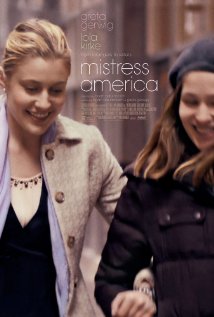
Mistress America

mistressposter

Who would have guessed that we might start to recognize a distinctive “Greta Gerwig” style of cinema?

Filmic sensibilities are an odd and difficult thing to define, but we know them when we see them. Woody Allen has a distinct sensibility and so does Martin Scorsese…and those two are in no way similar. Some films—whether tied to their namesakes or not—are easily catalogued as Capra-esque or Hitchcock-ean. And pretty much anyone who sees more than one movie a year can spot a Quentin Tarantino movie before the opening credits are done rolling.

But Greta Gerwig?

Indeed, the indie actress-cum-screenwriter has emerged in recent years as an idiosyncratic cinematic voice, with her latest film, Mistress America, a minor-though-charming addition to her growing and impressive filmography.

Mistress America, which Gerwig stars in, co-produced, and co-wrote with director and best beau Noah Baumbach, is an unexpansive meditation on loneliness, narcissism, and the cult of (failed) ambition. And, like much of Gerwig’s most personal work to date, it delights in the struggle of a generation desperate to find its place as it comes to terms with the twilight of youth and the dawn of adulthood.

Tracy, played with compelling angst by Lola Kirke, is a lonely college freshman, an eager fresh face in New York City. She dozes off in class. The school literary society rejects her. And the boy she’s crushing on finds another girlfriend. Not an auspicious start to the rest of her life. But on a whim she calls up Brooke, her soon-to-be stepsister, who is ten plus years her senior, lives in Times Square, and leads an impulsive and adventurous city life. Tracy’s mom is marrying Brooke’s dad, and although the two girls have never met before, they immediately bond…and Tracy’s whole existence transforms from still-life black-and-white to full-motion Technicolor.

Theoretically, this is Tracy’s story, but the movie—like everyone who comes in contact with her—is drawn to and fueled by the ultra-charismatic Brooke.

Gerwig writes and plays Brooke as a narcissistic force of nature: a whirlwind of egocentric observations, insights, schemes, and dreams. She survives on pure brute force of personality, living off of a combination of odd jobs and utilitarian relationships. And despite a nearly clinical case of self-absorption, Brooke appears to be the only one in her orbit who fails to see that—regardless of her magnetism—she is completely and utterly doomed to failure. She fails see it, yes, but you get the sense that deep down she is beginning to suspect it.

Regardless, Brooke is madly in love with Brooke, even though Brooke is the kind of person who would absolutely hate Brooke if she wasn’t actually Brooke. But maybe that’s how we all really feel about ourselves.

Gerwig’s cinematic baptism has come at the altar of filmmakers like Whit Stillman and Baumbach himself, and it shows in her scripting of Mistress America. And that’s not a bad thing. Though less self-conscious—but dramatically warmer—than movies like Metropolitan or Damsels in Distress (which Gerwig starred in, as well), Gerwig the writer shares a talky, erudite style with Stillman and Baumbach. But her earthy, human moments are significantly more impactful and resonant.

When Anna, a forgotten high school classmate, approaches Brooke in a bar and confronts her over an episode of emotional bullying from years gone by, Brooke is bewildered. She dismisses Anna’s condemnations with a casual, callous rebuke, and then later laughs off the incident and catalogues it as a story to share with friends.

Or maybe just a tweet.

Irrational Man: Philosophy & Justice

irmposter

Watching a Woody Allen movie these days is akin to watching a great athlete in the twilight of his career.

Every now and then you get to see a vintage performance, a reminder of the self-assured mastery and skill that once made this guy the greatest in the world. Every now and then he’ll go long stretches where he’s on top of his game and looking like the champion of old—filling up the stat sheet and wowing you with his ability to stay with the other players—only to falter on a few key shots or run out of gas at the end. And every now and then he throws up a complete brick, nearly missing the mark entirely and leaving you shaking your head and hoping he has what it takes to make on last run at a championship.

Unfortunately, despite a solid effort by his actors and some interesting moments here and there, Allen’s latest annual offering, Irrational Man, is more brick than anything else. It looks good coming off his fingertips, arcs encouragingly toward the basket, but ultimately clanks awkwardly off the rim and way, way out of bounds.

The Irrational Man at the core of the movie is Abe Lucas, a brilliant but troubled philosophy professor just beginning a new job at Braylin College, a fictional school in the northeast where the undergrads all talk like 40-year-old liberal elites and the co-eds have never heard of “Russian Roulette”. We know that Abe is brilliant but troubled because character after character carefully explains to us again and again and again and again and again—ad nauseam—that he is brilliant but troubled. Abe, floundering in the throes of a serious existential crisis, strikes up a friendship with one of his top students, Jill, who quickly falls for him. We know that she has fallen for him because character after character carefully explains to us again and again and again and again and again—ad nauseam—that she has fallen for him.

In case you’re not getting it on your own and need me to explain it to you: the worst flaw in Irrational Man is that Allen’s script constantly assumes that the audience just isn’t getting it and needs everything explained to them, over and over and over again. Jill has the same conversation with her boyfriend about her relationship with Abe at least three times. When the film pivots suddenly in its second half and there is a crime to be solved, one character’s theory is repeated no less than four times by various characters. And on and on. The repetition becomes so striking that it begins to appear almost strategic, but it ultimately just derails the movie’s momentum and leaves the viewer somewhat bored in slogging through the same material over and over again.

During one of their pseudo-dates, Abe and Jill find themselves at a diner, where they overhear a stranger’s heartbreaking story about how she is about to lose her children in a divorce. In that moment, Abe makes a life-altering decision, which propels Irrational Man in an unexpected–though more interesting–direction and gives meaning and purpose to his life.

Suddenly the cloud over Abe lifts. He begins to enjoy life again. He writes, he lusts, and he loves.

“What happened to the philosophy professor?” marvels a fellow faculty member with whom Abe is having an affair. “Christ, you were like a caveman!”

It’s a compliment.

From there, Irrational Man actually starts to pick up some steam. Abe sets his course, plots and plans, and acts—he says—for the first time in his life.

Woody Allen has written some beautiful dialogue in his career, brought to life some lively characters, and laced his screenplays with delicate irony, razor-sharp wit, and even instances of true suspense. Manhattan, Hannah and Her Sisters, and Match Point are just three illustrations of what has evolved into a monumental canon of excellent films that succeed in one or more of those areas.

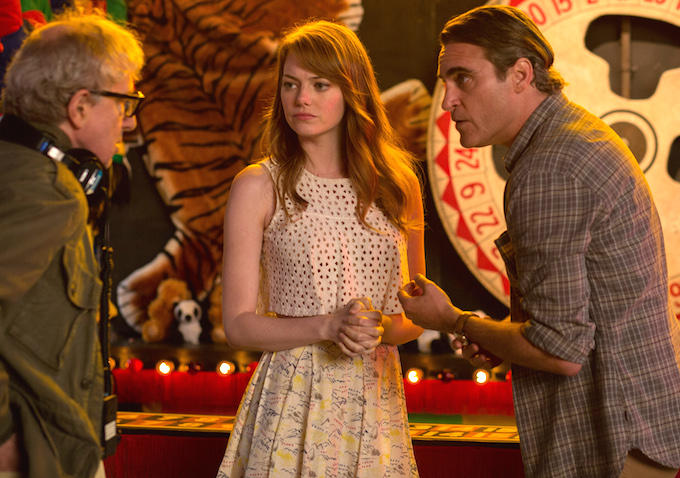
withwoody

But where Irrational Man actually succeeds has little to do with Allen’s direct contribution, but rather comes from the entirely game performances of the three leads: Joaquin Phoenix and Emma Stone in the two top roles, and Parker Posey as Abe’s colleague and lover, Rita. All three transcend the material and develop interesting, compelling characters that live and breathe and manage to keep us interested despite it all. Stone and Posey, in particular, do far more with their roles than one might expect, given what they have to work with. To a large extent, they are drawn as caricatures—as is Abe, for that matter—but their interpretation of their dialogue and ability to fill the empty spaces with empathy and real emotion adds blood and life to the film.

Phoenix keeps pace with the ladies, for the most part, but he suffers from the fact that he plays a character that never lives up to its own billing. Jill and Rita and other minor characters rhapsodize over Abe’s brilliance, but in the end we never really see it. His philosophical declarations are of the Philosophy for Dummies variety, and his fetishizing of joylessness rises to the level of your average college sophomore. As a result, it just becomes too hard to believe Phoenix’s performance because his character rings so hollow.

Despite it all, Irrational Man does offer the occasional nugget of satisfaction here and there, and its climatic moment is surprisingly intense and effective. Rarely has Allen’s presentation of violence been so raw and sudden, and punctuating a film that has seemed so lazy to that point with such a startling moment only amplifies its power.

In Match Point and Cassandra’s Dream, Allen offered competing positions on whether crime must be punished. And though Allen never resolves the philosophical issues he raises in Irrational Man, he does definitively break the tie on the question of whether or not justice must be served.

Black Sabbath

black_sabbath_poster

“I’m…hungry.”

When you or I mutter those words, it might foreshadow an assault on the refrigerator or a quick trip to a favorite gastropub.

But when Boris Karloff utters those words, with his trademark eye twinkle and lip curl, you’d better get yourself and your loved ones inside and lock all the doors and windows.

Such is the lesson of Black Sabbath.

The anthology format has long been a staple of the horror film: bite-size stories strung together either by common source author (1962’s Tales of Terror or 1963’s Twice Told Tales), common creative hook (1983’s Twilight Zone: The Movie or 2012’s V/H/S), some sort of common thread that binds the stories together (1988’s Waxworks or 2007’s Trick ‘r Treat), or some other hook.

1963’s Black Sabbath is neither the first nor the best of that tradition, but in uniting Italian master Mario Bava with horror icon Karloff, the film carves out its own delightful niche in horror history.

In addition to starring in one of the three tales of the film, Karloff “hosts” Black Sabbath in a series of cheesy (some might say unfortunate) introductions that offer a few chuckles but function exclusively to get us from one story to the next.

witch

The first story, called “The Drop of Water”, is set in London and follows the misadventures of an outcall nurse who gets summoned in the middle of the night to prepare the corpse of a witch who died in her mansion home overnight. When the nurse makes the fatal decision to steal the witch’s ring off her hand while she dresses the body, it sets in motion a nightmarish evening of otherworldly revenge. “The Drop of Water” is classic Bava, with gothic atmosphere; sudden, startling images; and a slow march toward inevitable revenge. The first glimpse we see of the dead witch in her bed—crazy eyes wide open, lips curled back in a menacing smile—does send chills up and down the spine, and “The Drop of Water” ends up to be a largely satisfying first chapter of the film.

telephone

“The Telephone”, the second of the three tales, involves a French call-girl who returns home from “work” one evening and begins to receive a series of threatening telephone calls that escalate in their intensity over the course of the night. The sexuality of “The Telephone” is pervasive, not only in the long, lingering shots of lead Michele Mercier’s perfect body and her suggestively sensual interactions with the woman she calls for help, but also in the violently sexual overtones of the threats she suffers. In “The Telephone”, suspense and teasing are two side of the same coin, as are fear and titillation, desire and hatred, and sex and violence. And it is all practically incomprehensible. The original Italian version of the film planted this story firmly in the real world; but in adapting this sequence for American release, changes were made to add supernatural elements to the story. Those changes completely muddle the tale and ultimately undermine the segment, making it by far the weakest of the three.

karloff-BLACKSABBATH

The coup de grace, however, is the third segment, “The Wurdalak”, featuring Karloff as Gorca, an elderly Russian vampire-like creature who must feast on the blood of those he loves in order to survive. Bold and atmospheric, “The Wurdalak” feels like the perfect mesh of classic Italian horror and the sensibilities of American International Pictures (AIP), the famous low-budget American studio that distributed Black Sabbath in the United States. A feast of classic horror tropes, “The Wurdalak” offers up vampires stalking the rubble of ruined castles, a baleful child demon, savagery and seduction, and Karloff. Oh Karloff! The horror icon rumbles through “The Wurdalak” like a force of nature, menacing and tragic at the same time, playful but intense, a vintage performance from a master of horror.

Ultimately, Black Sabbath is a bit too uneven to qualify as a total triumph, but the first and last segments offer enough simple pleasures and jolts and scares to satisfy any classic horror lover’s appetite.

Like Karloff’s Gorca, you may start the proceedings with a gnawing hunger that you can’t quite understand, but by the end of Black Sabbath you will have found yourself well-fed and gratified.

Best of Enemies: Buckley vs. Vidal

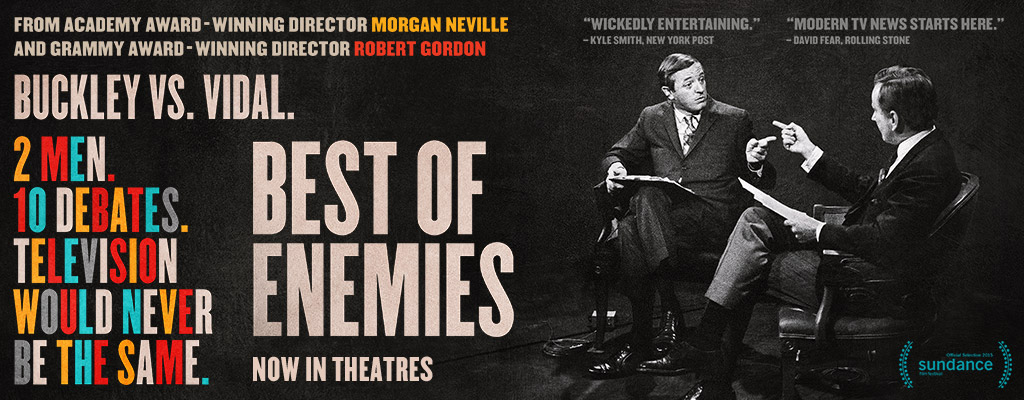
poster1

In 1968, politics on television changed forever.

During that year’s Republican and Democratic National Conventions, NBC News and CBS News provided comprehensive gavel-to-gavel convention coverage anchored by straight-arrow newsmen like Walter Cronkite, David Brinkley, and Chet Huntley. ABC News could not afford such lavish coverage, languishing as it did a distant third in the nightly ratings. As one observer put it, they would have been in fourth place, but there were only three networks.

So ABC News offered viewers a different kind of convention coverage. After abbreviated summaries of each day’s convention proceedings, ABC capped the day with one-one-one debates between conservative William F. Buckley, Jr., and liberal Gore Vidal.

Those debates are the subject of the fascinating new documentary Best of Enemies.

Buckley and Vidal were two sides of the same coin. Matter and anti-matter. Fire and ice. But both erudite intellectuals. Both passionate ideologues. Both failed politicians. Both savage debaters.

And both hated each other thoroughly and sincerely.

When ABC News first approached Buckley about participating in the nightly discussions, they asked him if there was anyone he would prefer to debate. He told them anyone other than a communist or Gore Vidal.

William F. Buckley, Jr., was the godfather of the modern conservative movement in America. He founded the magazine National Review, the (other) Bible of American conservatism. He palled around with Ronald Reagan. And he hosted the television show Firing Line, in which he personally debated liberals from all walks of life. Buckley saw Vidal as a symbol of the moral decay of society, genuinely considering him and what he represented to be dangerous to the future of America.

To Gore Vidal, Buckley represented the intellectual façade that masked the ugly machinations of the Republican Party and the conservative movement that had seized control of it. By the time they met in 1968, Vidal was a successful author, screenwriter, and liberal cultural warrior. He looked at Buckley and saw bigotry, paternalism, and elitism, and he suspected that for all of Buckley’s intellectual gymnastics, he was driven—like all conservatives, Vidal felt—by greed and avarice and lust for power.

As Best of Enemies documents, once the debates began, it became clear almost immediately that Buckley and Vidal were largely uninterested in debating the events of the day and only slightly more interested in debating the broader policy questions that would shape the coming Presidential election. Instead, their aim night after night became to ridicule the other, to undermine and attack each other’s intellectual and moral foundations, and to completely discredit not only each other, but by proxy the ideological movement that the other represented.

The documentary demonstrates how Vidal came to the debates armed with opposition research, scripted and rehearsed “spontaneous” retorts, and a strategy to grate, irritate, and bait Buckley in order to “expose” him to a mainstream, national audience.

And his strategy worked.

Over the course of the debates, snide asides became pointed barbs, which evolved into personal insults, which exploded into a dramatic, riveting exchange in which Vidal taunted Buckley as a “crypto-Nazi” and Buckley spat back his infamous, defining invective: “Now listen, you queer, stop calling me a crypto-Nazi, or I’ll sock you in your goddamn face and you’ll stay plastered.”

WILLIAM BUCKLEY;GORE VIDAL

The live-TV exchange was jaw-dropping at the time, and nearly 40 years later, the documentary’s juxtaposition of images of the trembling-with-anger Buckley and the smug, self-satisfied, grinning Vidal completely and utterly enthralls.

At the heart of Best of Enemies, though, is not just the story of two men, ten debates, and a few weeks in 1968.

The Buckley-Vidal debates set in motion a change in televised political coverage that has never been reversed and that now defines the way Americans consume their political news…and really their politics in general.

ABC’s ratings soared during the 1968 Party Conventions, and never again did any network provide full gavel-to-gavel convention coverage. Commentary began to dominate political news, later giving rise not only to the take-no-prisoners formats of broadcast network shows like Meet the Press, cable programs like Crossfire, and even whole networks like Fox News and MSNBC.

The seeds of the Buckley-Vidal debates flowered well beyond politics, in fact. Today, television, radio, and internet pundits shout angrily at each other daily about the latest sports news, the direction of the stock market and the economy, and even about the latest foibles of the least important celebrities.

Even more significantly, though, the glimpse into the Buckley-Vidal debates offered by Best of Enemies is striking in its implications for how people who disagree today feel not only about the issues that they debate but also about the people on the other side of the aisle. It is no longer enough to discredit someone’s argument or to rhetorically triumph through logic or reason. Rather, victory can only be achieved by discrediting the other guy, the other Party, or the other movement. Absent the ability to prove the supremacy of any particular ideological value beyond a reasonable doubt, it is much easier to attack motives, to question morals, and to damn messengers.

None of that, of course, can entirely be traced to the Buckley-Vidal battles, but that brief moment in political history—and the window into it provided by Best of Enemies—certainly offers an absorbing look at what we have all become.

As for Buckley and Vidal themselves, Best of Enemies submits that in two lifetimes of tremendous achievement, their battles in 1968 were defining personal moments.

For decades afterward, Vidal treasured the fleeting victory of that explosive outburst from Buckley, which conversely haunted the conservative warrior until his death in 2008.

A death, incidentally, that Best of Enemies suggests Vidal—who died four years after Buckley—delighted in, if only because it gave Vidal the last word.

Trainwreck Stays Pretty Much on the Tracks

Trainwreck_poster

It takes some guts to call a movie Trainwreck.

Let’s face it, if the movie turns out to stink, the reviews—or at least the headlines—pretty much write themselves. But thankfully the new Amy Schumer comedy mostly stays on the rails throughout, and despite being a surprisingly paint-by-the-numbers post-modern romantic comedy, it provides plenty of laughs and a solid vehicle for Schumer’s first major film role.

I will confess up front to not being a fan of the hit (or is it just hip?) comedy series Inside Amy Schumer…not because I don’t like the show, but because I really haven’t seen it. However, the bits and pieces I have caught of her skits and standup on social media and via various podcasts confirm that she is a true comedic talent. Her subversively incisive feminist takes on modern culture, gender roles, and 21st century womanhood put her into the Stewart-Colbert category of cultural commentator, with the rare ability to unpack an idea or issue completely, lay it bare, and expose it for all its absurdity and hypocrisy. All while making us collapse in fits of laughter.

That’s why, for all its laughs, Trainwreck ends up to be just a bit of a disappointment.

Amy Schumer plays Amy, a young-ish New York career gal frozen somewhere between crazy party girl and successful adulthood. By day she writes for a men’s magazine called S’Nuff, and by night she embraces a bacchanalian lifestyle that generally ends with some sort of disastrous sexual encounter…either with a random stranger or her own muscle-bound, sexually-confused boyfriend. When we first meet Amy, you see, she is just a young girl, and her father is trying to explain to her and her sister why he is leaving the family. Both girls have favorite dolls, he explains, but that doesn’t mean they don’t want to play with other dolls, right? After running down all the possible doll types that they—or he—might want to play with, he sums things up by making the girls repeat the lesson over and over again: “Monogamy isn’t realistic.” And that remains Amy’s mantra until she falls for a successful sports surgeon (a terrific post-Saturday Night Live Bill Hader)…and you can pretty much paint in the numbers from there.

Trainwreck does have plenty of highs.

Schumer is terrific from start to finish. Her writing and portrayal of a young woman who is both comfortable in her own skin and still starting to recognize that maybe it’s time to grow up is legitimately spot-on. And her hilarious sexcapades-gone-wrong are downright hilarious. At the same time, Trainwreck focuses as much on Amy’s family relationships—primarily between her and her sister and father—as on her romantic quest, delivering a handful of truly touching moments and one full-on tear-jerker.

But there are just too many lows.

As Hader’s best friend, LeBron James plays a pretty funny version of himself: fanatical about Cleveland, hopelessly romantic, and outrageously cheap. But he really can’t act. And when the film feels the need to expand its universe of sports-personalities-as-themselves by bringing together James, Chris Evert, Marv Albert, and Matthew Broderick (what?) for a key late scene, the result is, well, a total train wreck.

More than the comedic misses, though, the ultimate trajectory of the movie and its sappy conclusion are a bit of a head-scratcher.

All that said, it’s probably unfair to judge Trainwreck on anything other than what it is.

Trainwreck is a comedy, and it’s funny.

And that’s good enough for a Friday night.

Double Indemnity: Double the Fun 70 Years Later

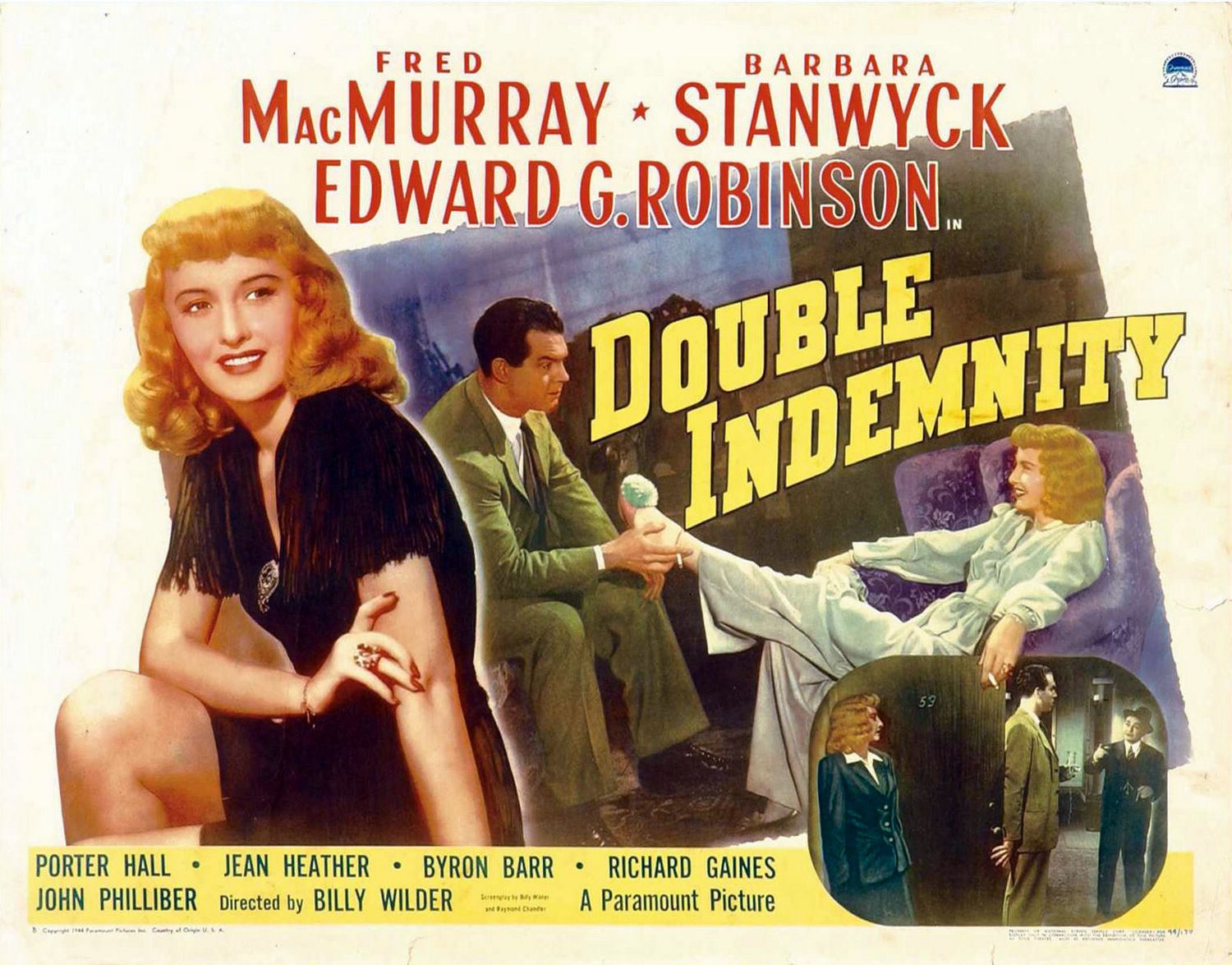
Double-Indemnity1

Turns out the insurance business is a hell of a lot more interesting than most of us think.

Between the wise-cracking salesmen, the dangerous women, the tough-as-nails claims adjusters, and all the schemes, twists, and intrigue, it’s no wonder that premiums tend to spiral out of control.

Or at least that’s the impression you get from Billy Wilder’s deliciously-fun Double Indemnity.

Based on a 1935 novella by James M. Cain—which, in turn, was based on a famous murder plot perpetrated in Queens, NY, in 1927—Double Indemnity is the story of a successful, fast-talking, low-character insurance salesman, Walter Neff, who falls for the wrong woman and gets tangled up in a plot to murder her husband for the insurance payoff. When the woman, Phyllis Dietrichson turns out to not be the abused, innocent victim that she initially appeared to be, things spiral fatally out of control for Neff.

From the first frame to the final image, Double Indemnity is a pulsating popcorn thriller, through-and-through.

It took nearly a decade for Double Indemnity to make the leap from story to screen, primarily because of the then-controversial nature of the material. Although a studio bidding war erupted shortly after the publication of the novella, it ended quickly when the infamous Hays Office began strictly enforcing the “moral guidelines” of the Motion Picture Production Code. Although codified in 1930, the so-called Hays Code was not aggressively enforced until circa 1934, and when the Hays Office got wind of the bidding war over the rights to Double Indemnity, it issued a stern warning to the major studios.

“The general low tone and sordid flavor of this story,” Hays Code enforcer Joseph Breen wrote, “makes it, in our judgment, thoroughly unacceptable for screen presentation before mixed audiences in the theater. I am sure you will agree that it is most important…to avoid what the code calls ‘the hardening of audiences,’ especially those who are young and impressionable, to the thought and fact of crime.”

Eight years after Double Indemnity’s first flirtation with Hollywood, Paramount tried again, buying the rights to the film and eventually getting a film treatment approved by the Hays Office. The project was then handed off to writer-director Billy Wilder, who collaborated on the screenplay with Raymond Chandler, then a first-time Hollywood screenwriter. Chandler was only a few years removed from his breakout first novel, The Big Sleep, but even Wilder (rightly) credits much of Double Indemnity’s success to what would soon become Chandler’s trademark gift for crackling, amped-up dialogue. “Yes, I killed him,” Neff confesses in the film’s opening scene. “I killed him for the money and a woman. And I didn’t get the money, and I didn’t get the woman. Pretty, isn’t it?”

It wasn’t just the Production Code that threatened to derail Wilder’s movie, though.

None of the three leads—Fred MacMurray as Neff, Barbara Stanwyck as Dietrichson, and Edward G. Robinson as hard-boiled claims adjuster (hard-boiled claims adjuster!) Barton Keyes—actually wanted to be in the film.

MacMurray and Stanwyck, both already box office stars, objected to playing such seedy, unseemly characters. In fact, MacMurray wasn’t even the studio’s first choice, but after Alan Ladd, James Cagney, Spencer Tracy, Gregory Peck, Fredric March, and George Raft all turned the role down, MacMurray became Wilder’s last resort. Eventually, through sheer force of will, Wilder signed both his leads, also securing Robinson despite the actor’s misgivings about playing what amounted to a supporting role for the first time since he became a star.

As it turns out, Double Indemnity is the best film that any of them ever made.

Double Indemnity rolled through Madison last week as part of the Turner Classic Movies’ “TCM Presents” series. To my discredit, I’d never discovered Wilder’s classic before, but 70 years after hitting theaters for the first time, Double Indemnity still feels as fresh and engaging as any new release you might find at the multiplex. Highly stylized, fast-paced, and ruthless, the film hooks you immediately with the first-scene appearance of Neff, who mysteriously stumbles into his insurance office, wounded and struggling, and spills his sordid story into a Dictaphone machine. From there, his confession spools out in voice over, and the film never slows down.

Part of the fun of Double Indemnity is watching the two leads, especially MacMurray, play against type. For someone who grew up knowing MacMurray primarily as the lovable father on My Three Sons and as the Flubber-inventing hero of The Absent-Minded Professor, it’s a delight seeing him play the snake-charming, amoral insurance salesman Walter Neff.

But as a life-long film buff, the wonder of finally catching up with Double Indemnity is seeing what many critics (though not all) identify as the first real example of American film noir, and seeing so many of the classic elements of noir come together on screen for the first time. The unseemly characters whose lust and greed set the wheels in motion for their own inevitable destruction. The stylized lighting and masterful mis-en-scene that pull you into the characters’ hearts and minds. The rat-a-tat-tat dialogue that slips from seduction to scheming without losing a beat.

And oh that femme fatale!

Stanwyk’s treacherous blonde seductress rivets from her first appearance on-screen, getting her hooks immediately into Neff with demure, playful allure. Like Neff, we go right along with her for the ride, slowly discovering her devious motives, her malicious intent, and ultimately her double-crossing plot. By the time he figures out the truth about her, his fate has already been sealed, and all that is left for him to do is to stumble through the final act of his deadly tale.

“Suddenly it came over me that everything would go wrong,” Neff mutters in voice over. “It sounds crazy, Keyes, but it’s true, so help me. I couldn’t hear my own footsteps.”

“It was the walk of a dead man.”

Woody and the Women

allen

“Does Woody Allen have a woman problem?”

IndieWIRE’s Ryan Lattanzio asks that question in a blog post this week titled “The 9 Women You Meet in Woody Allen Movies”, an article tied to Allen’s upcoming 2015 release, Irrational Man.

Leading with Irrational Man’s Emma Stone, Lattanzio writes:

indiewire

Lattanzio then goes on to a rather reductive take on the 9 types of women that he says populate Woody Allen’s film oeuvre.

Honestly, it would seem that if you take any filmmaker and look at his or her characters—male or female—and try to archetype them, you might be hard-pressed to come up with nine distinct types! Are Martin Scorsese’s antiheroes so different from one film to the next? Or how about Wes Anderson’s quirky ensembles? Or Sophia Coppola? I mean, how different, really, was Bill Murray’s aging burnt-out movie star in Lost in Translation from Stephen Dorff’s young burnt-out movie start in Somewhere?

When it comes to Woody Allen, though, it has always been fashionable (if not incredibly lazy) to ask, “Does Woody Allen have a woman problem?”

If he does, then it is a problem that almost every actress in Hollywood over the past forty years has wanted to be a part of. Any why not? Perhaps actresses are so eager to work with Allen because of the phenomenal success women have historically had starring in his films.

Despite Allen’s apparently horrible failings at writing female characters, an astounding 12 actresses have been nominated for 13 Oscars for appearing in Woody Allen films, and 6 times they have walked away as winners.

A quick summary:

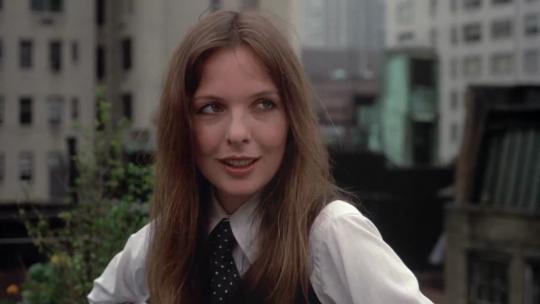
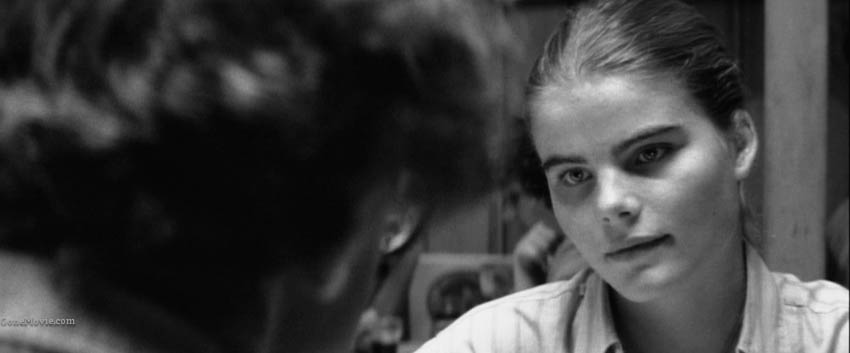
Diane Keaton was nominated for and won Best Actress for Annie Hall in 1977.

diane-keaton-annie-hall

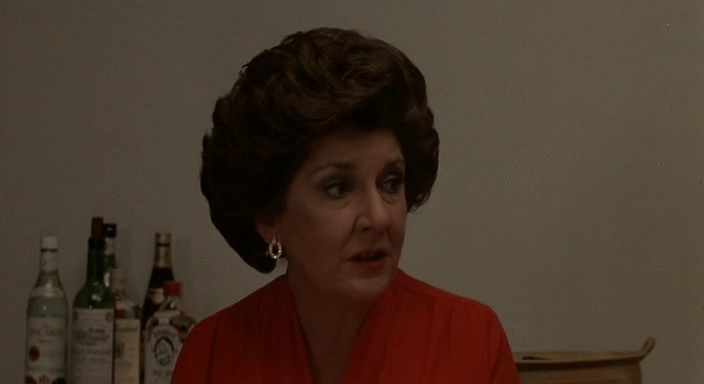
Maureen Stapleton and Geraldine Page were BOTH nominated—Supporting Actress and Actress, respectively—for 1978’s Interiors.

Interiors-StapletonInteriors-Page

Mariel Hemingway was nominated for her supporting turn in Allen’s masterpiece, Manhattan, in 1978.

Manhattan (1979)

Dianne Wiest was nominated for and won Best Supporting Actress in 1986 for Hannah and Her Sisters. (No good females roles in that one, right?)

dianne-wiest

Judy Davis gave a volcanic performance, earning a Supporting Actress nomination, for 1992’s Husbands and Wives.

1375933155_Davis

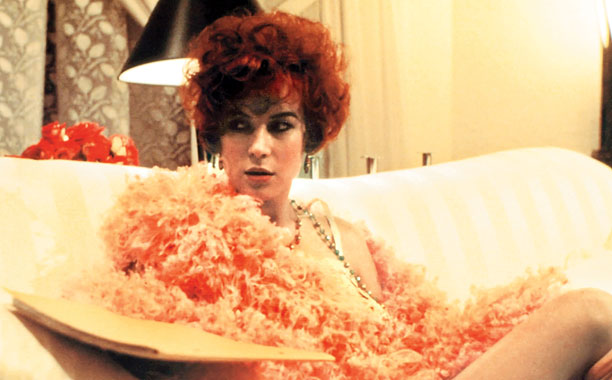
Dianne Wiest and Jennifer Tilly both earned nominations for Supporting Actress, with Wiest claiming her second Allen Oscar win, for Bullets Over Broadway in 1994.

wiestM8DBUOV EC002

Mira Sorvino earned an improbable Supporting Actress win for 1995’s Mighty Aphrodite.

Mira-Sorvino-Mighty-Aphrodite

Samantha Morton earned a Supporting Actress nomination for Sweet and Low Down in 1999.

samantha

Penelope Cruz smoldered and erupted her way to a Supporting Actress win in 2008 for Vicky Cristina Barcelona.

Vicky-Cristina-Barcelona-Penelope-penelope-cruz-4121525-900-600

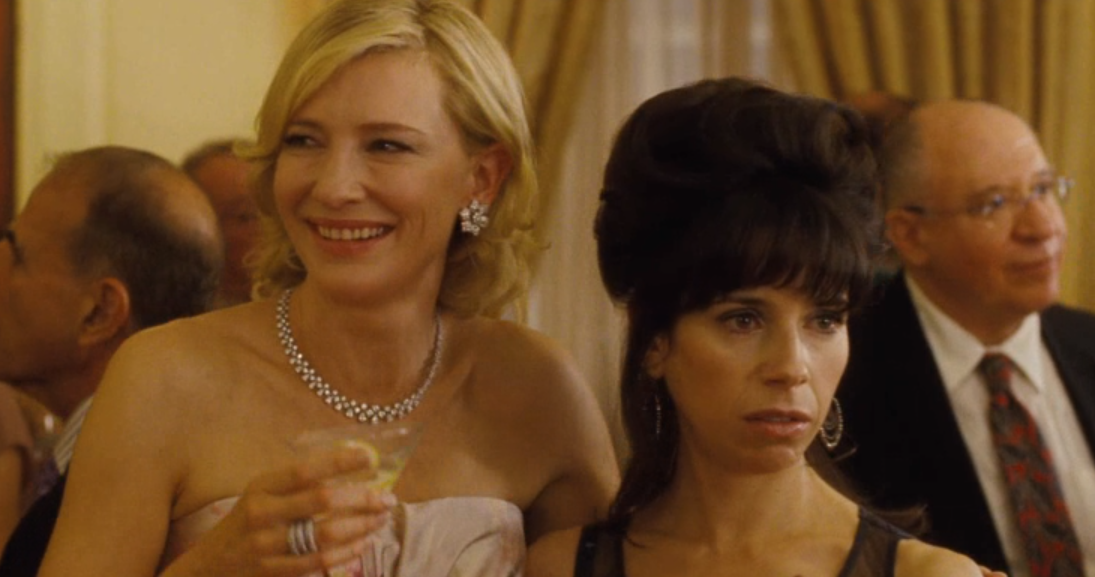
Sally Hawkins and Cate Blanchett were both nominated—Supporting Actress and Actress, respectively—with Blanchett the runaway Oscar winner for 2013’s Blue Jasmine.

bluejasmine

Woody Allen writes such weak and obvious female characters that three times multiple actresses have been Oscar-nominated for his films?

And those are just the Oscar winners!

Don’t forget about Diane Keaton’s brilliant turn in Manhattan. Or the phenomenal ensemble work done not only by Wiest in Hannah and Her Sisters, but also Mia Farrow, Barbara Hershey, and even Maureen O’Sullivan in a small role. Anjelica Houston’s shattered other woman in Crimes and Misdemeanors? Scarlett Johansson’s scintillating seductress in Match Point? Heck, even the minor, mostly-dismissed You Will Meet a Tall Dark Stranger featured strong, vibrant work from Gemma Jones and Naomi Watts.

To be sure, Allen has worked with some of the best actresses in the business, and the credit for their performances go first and foremost to them. But it is no coincidence that great actresses climb over each other to try to appear in Woody Allen movies, despite the fact that there haven’t exactly been a lot of hits in his filmography since the early ‘80’s.

Clearly, they must see something in his female characters that they want to play, and something in the director that will allow them to do their best work.

Does Woody Allen have a woman problem?

Only in that even in churning out a movie every single year, there still aren’t enough parts for all the actresses who want to play them.